
 10 AM – 5 PM

KADIST: Fertile Resistance Beneath the Surface
KADIST: Fertile Resistance Beneath the Surface
This screening program brings together two video works by Miljohn Ruperto that interrogate the boundaries between human perception, historical narrative, and the natural world. By blurring the lines between what we see and what we know, Ruperto’s films challenge the stability of “fact” and “nature.” Followed by a conversation with the artist and VCU Cinema professor J.M. Tyree.
Miljohn Ruperto, Janus, 2013, 3:30 minutes.Single-channel digital animation video, color, sound. Ruperto’s high-definition video Janus takes its name from the two-faced Roman god of duality and transitions, of beginnings and endings, gates and doorways. He is usually depicted with two faces as he looks both forward and backward, to the future and the past. The video, which is deftly animated in collaboration with Aimée de Jongh, presents a close-up of a dying “duck-rabbit,” a vivified version of an ambiguous illustration made popular by the Austrian-British philosopher Ludwig Wittgenstein in his Philosophical Investigations.
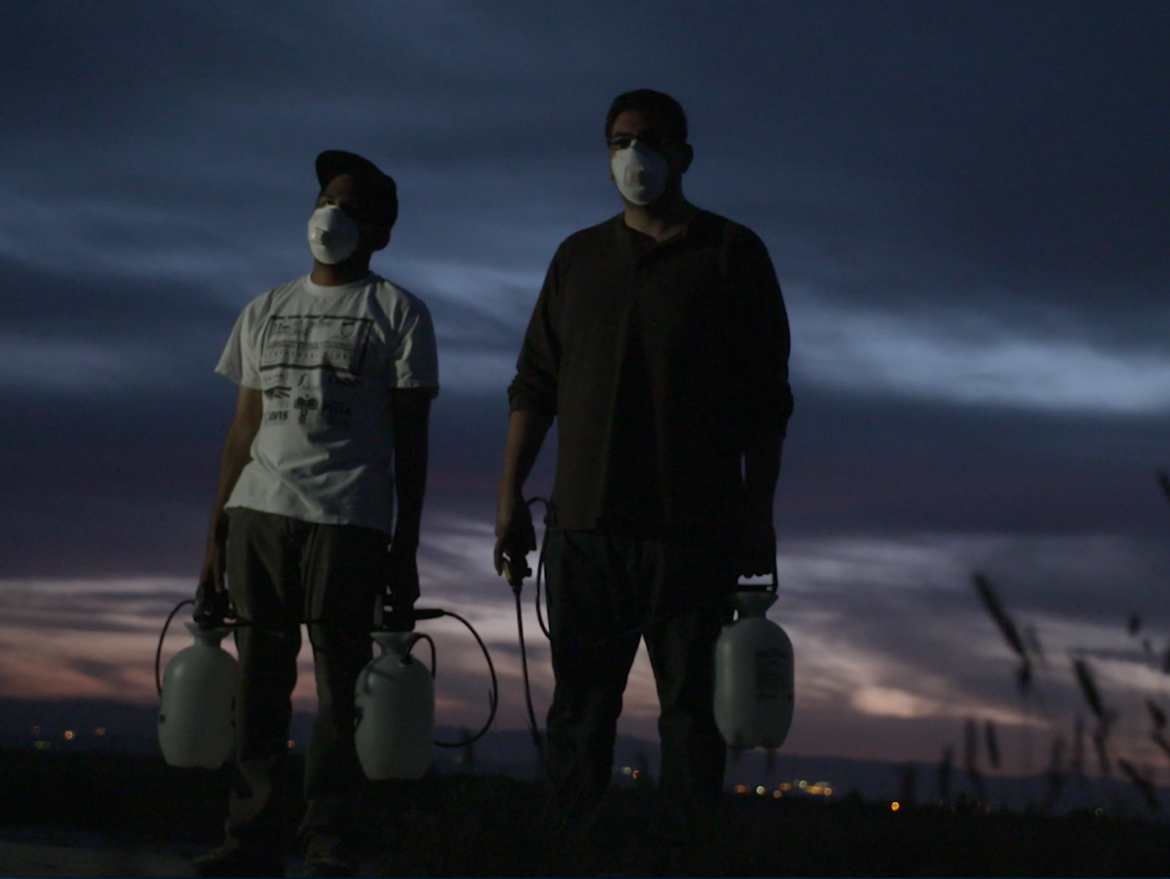
Rini Yun Matea and Miljohn Ruperto, Ordinal (SW/NE), 2017, 45 min, video, color. Ordinal (SW/NE) is an experimental documentary. The film traces the cultural and environmental influences of a soil-dwelling, pathogenic fungus, Coccidioides immitis, and its associated disease, valley fever, in California’s Central Valley. Interweaving past, present and mythological time, the film draws upon historical and cultural references, including the plight of migrants during the Depression, the spread of the disease in recent years, contemporary theories of climate change, and the significance of the desert wind in ancient Assyria. “In Ruperto and Keagy’s film, natural phenomena remain neutral, fleeing from any kind of judgment and avoiding binary oppositions of positive and negative, destruction and regeneration, life and death.”-Ruth Estévez, former curator at REDCAT Gallery, Los Angeles